Opening This Fall

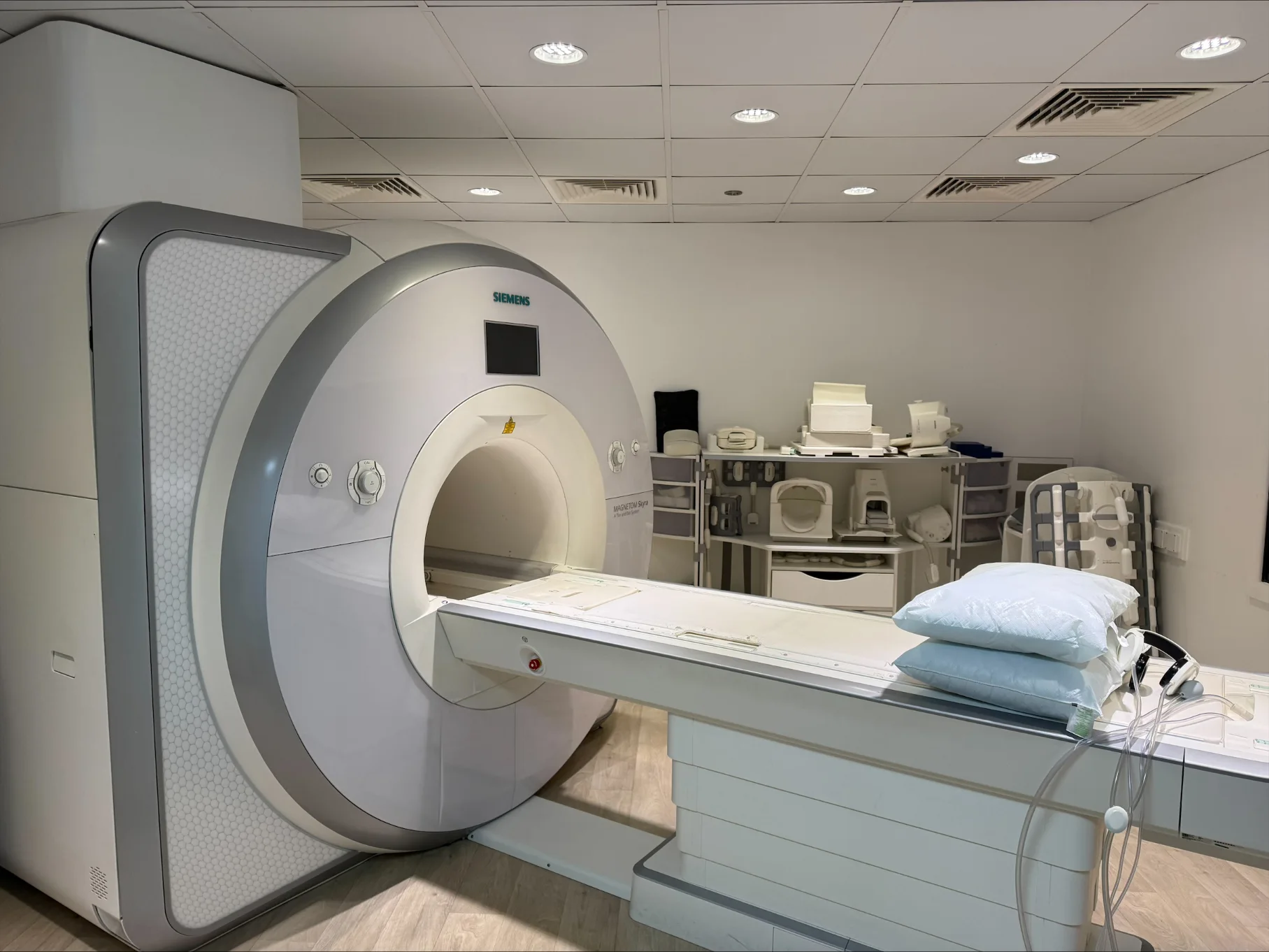
If you have a joint replacement, pacemaker, surgical screws, or other metal implant, you may be wondering: can you get an MRI with metal implants at all? It's one of the most common safety questions patients ask before scheduling a scan, and for good reason — MRI machines use powerful magnets, and not all metals react to them the same way.
The good news is that many implants today are designed to be MRI-safe or MRI-conditional, meaning they can safely go through a scan under the right conditions. This guide explains which implants are generally safe, which require extra precautions, and what our team does to keep every scan safe for every patient.
MRI scanners rely on a strong magnetic field. Certain metals, especially ferromagnetic materials like iron and some steel alloys, can heat up, move, or interfere with image quality inside that field. This is why every patient completes a safety screening before stepping into the scan room, regardless of how minor an implant may seem.
Medical devices are generally categorized as:
Many common implants are made from non-magnetic materials like titanium and are typically safe for MRI, including:
Some devices are MRI-conditional, meaning they can typically be scanned but require specific settings or coordination with your cardiologist or device manufacturer:
A small number of implants are considered unsafe for MRI or require additional evaluation before scheduling:
If you have any of these, our team will work with your physician to determine if an alternative imaging test is more appropriate.
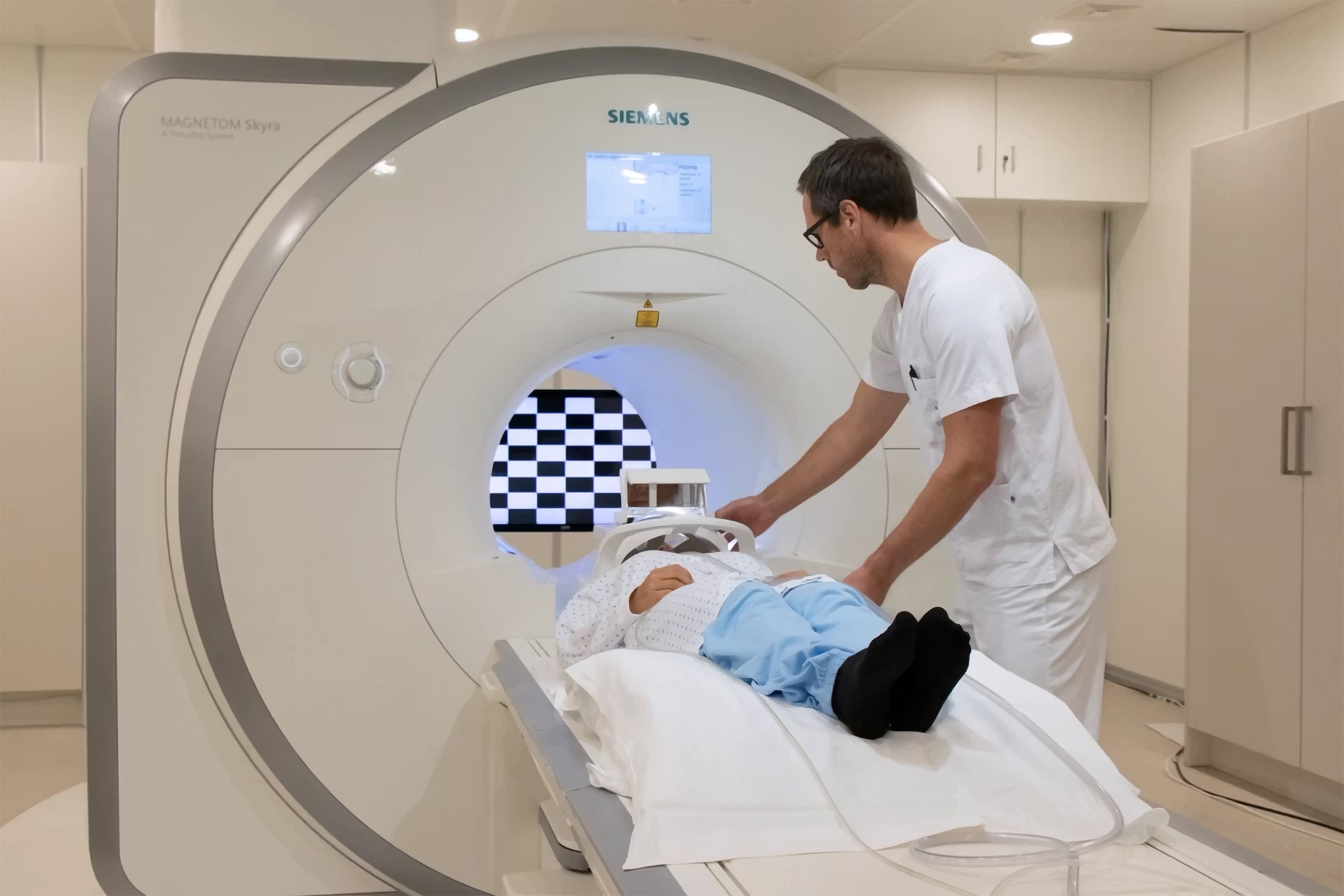
Before every MRI, patients complete a detailed safety screening that asks about:
Our radiology team reviews every form carefully and will contact your implant manufacturer or surgeon if additional confirmation is needed.
Many implants come with a manufacturer ID card that specifies the exact model and MRI compatibility. If you have one:
Myth: "Any metal in your body means you can never get an MRI."
Fact: Most modern implants are MRI-safe or MRI-conditional; very few devices are truly unsafe.
Myth: "Dental fillings will get pulled out by the MRI magnet."
Fact: Standard dental fillings and most dental work are not affected by MRI magnets.
Myth: "All pacemakers are dangerous in an MRI."
Fact: Many current pacemaker models are specifically designed to be MRI-conditional and can be scanned safely with proper settings.
If an MRI isn't safe for your specific implant, your doctor may recommend:
Our team can help coordinate with your physician to determine the best alternative if needed.
If you're unsure about your implant's MRI compatibility, contact your surgeon or implant manufacturer before your appointment. Our scheduling team can also help gather this information in advance so there are no surprises on scan day.
Have an implant and questions about your MRI? Contact Our Imaging Centre before booking, or Speak with Our Radiology Team to confirm your safety screening details in advance.