Opening This Fall
Your musculoskeletal system is made up of:
When something goes wrong in any part of this system, finding the exact cause requires more than a physical exam or a basic X-ray. A musculoskeletal MRI uses a strong magnetic field as well as radio waves to produce highly detailed images of these structures, giving your physician a precise picture of what is happening beneath the surface.
For patients across the Brazos Valley seeking an MRI near me that specializes in soft-tissue and joint imaging, Aggieland Imaging provides dedicated musculoskeletal MRI services on our Siemens Espree 1.5T wide-bore scanner. Every scan is reviewed by a qualified radiologist and reported directly to your referring physician.
A musculoskeletal MRI is typically ordered when other imaging methods cannot explain pain, swelling, or limited joint or soft-tissue movement. It is particularly useful for identifying injuries and conditions that do not show up on standard X-rays.
Your physician may refer you for a musculoskeletal MRI in Texas for any of the following reasons:
Among athletes, sports injury MRI is among the most common referrals in musculoskeletal imaging. Whether the injury involves a torn ligament, a muscle strain, or a stress fracture, MRI provides the detail needed to guide the right treatment decision.
Unlike X-rays, which only capture bone structures, musculoskeletal MRI visualizes the full spectrum of tissues that make up your joints and surrounding areas. This includes cartilage surfaces, synovial tissue lining the joints, individual muscle groups, tendon attachments, ligament integrity, and the presence of fluid or inflammation within a joint.
A musculoskeletal MRI near me at Aggieland Imaging can evaluate a broad range of body areas in a single appointment. This includes the ankle, foot, wrist, elbow, and hand, as well as the larger joints such as the knee, shoulder, and hip. Soft-tissue tumors, whether benign or malignant, can also be characterized with MRI, which helps physicians determine the appropriate course of management.
Because musculoskeletal MRI captures multiple tissue types simultaneously, it often provides information that shortens the diagnostic process and allows your physician to move toward a treatment plan more efficiently.
Why musculoskeletal MRI is an effective diagnostic tool:
As a dedicated outpatient MRI College Station facility, Aggieland Imaging provides musculoskeletal imaging in a calm, efficient environment without the registration delays or overhead costs of hospital-based imaging.
Safety considerations:
Patients with metallic implants, surgical hardware, or pacemakers should inform our team before scheduling an appointment. Gadolinium-based contrast is occasionally used to improve the visibility of certain soft-tissue abnormalities and is generally well tolerated. Patients with kidney disease or known contrast allergies should discuss this with their physician in advance. Pregnant patients should consult their physician before proceeding with an MRI.
When you arrive at Aggieland Imaging, our team will walk you through a safety screening and check-in process. You will be asked to remove all metal items, including jewelry, watches, and hairpins. A gown may be provided if your clothing contains metal components.
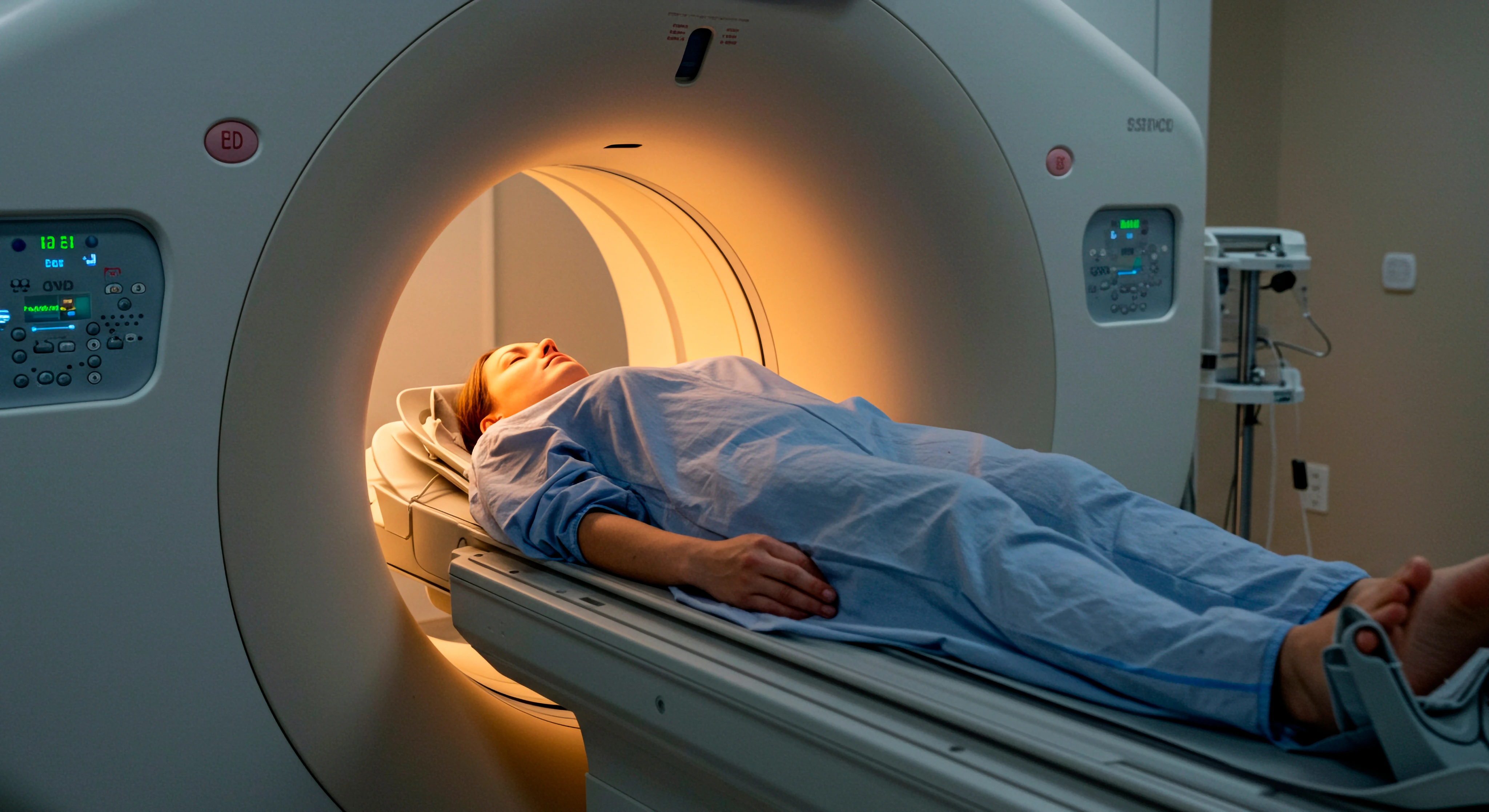
Depending on the body part being imaged, you will be positioned on a padded table so that the area of interest is closest to the scanner. 1.5T Siemens Espree wide bore scanner comfortably accommodates patients of all body types, and its spacious design reduces the sense of confinement that some patients associate with older MRI machines.
The machine produces a rhythmic series of sounds during imaging, and earplugs or headphones are available throughout the scan. Our MRI technologist stays in constant communication with you via intercom and can pause the scan whenever needed.
A musculoskeletal MRI typically takes 30-60 minutes, depending on the area being examined. Remaining still during the scan is important to ensure your radiologist can see the image clearly.